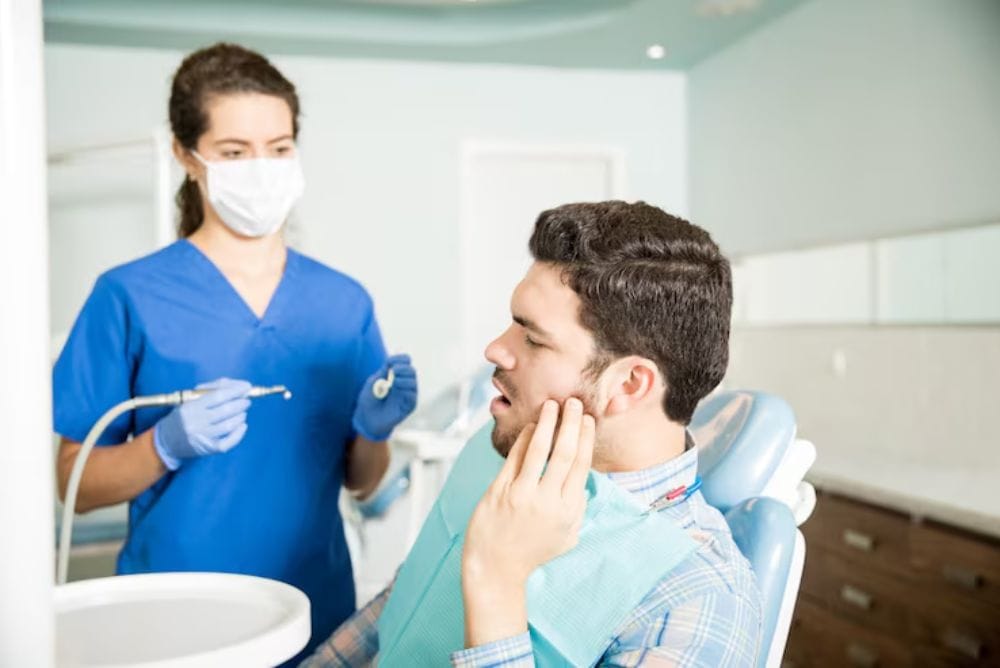
A swollen jaw is not something to brush off or wait out. While some mild swelling can result from something minor like a small knock or muscle soreness, significant or worsening jaw swelling often points to something more serious happening beneath the surface. Knowing when to act and how quickly can make a real difference to your health and recovery. If you are near a dental clinic in NE Calgary, understanding the warning signs of dangerous jaw swelling could genuinely protect you from a much bigger problem.
What Causes a Swollen Jaw?
Jaw swelling can come from many different sources. Some are relatively minor. Others require urgent professional attention.
Common causes include:
- Dental abscess – A bacterial infection that forms a pocket of pus near the root of a tooth or in the gum tissue
- Impacted wisdom tooth – A wisdom tooth stuck beneath the gum line can cause significant swelling and pressure
- Tooth infection – decay that has reached the inner pulp of the tooth can spread to surrounding tissue
- Gum disease – advanced periodontitis can cause swelling and infection deep in the gum tissue
- Jaw injury or trauma – A blow to the face can cause swelling from bruising or a fracture
- Salivary gland infection – blocked or infected salivary glands beneath the jaw can cause noticeable swelling
- Cyst or growth – fluid-filled cysts near the jaw can develop slowly and cause gradual swelling
- Allergic reaction – sudden swelling after eating or taking medication may be allergy-related
Not all of these require the same level of urgency. The key is recognizing the signs that mean something serious is happening.
Warning Signs That Your Swollen Jaw Is Dangerous
This is the most important part of this guide. Some symptoms alongside jaw swelling are serious red flags that require immediate care.
Seek emergency dentistry near you right away if your jaw swelling is accompanied by:
- Difficulty breathing or swallowing—this is a medical emergency. Call emergency services immediately. Swelling that affects the airway is life-threatening.
- High fever—a temperature above 38.5°C alongside jaw swelling suggests a spreading infection
- Swelling spreading to the neck or floor of the mouth—this indicates the infection may be moving into deeper tissue
- Severe, throbbing pain that does not respond to over-the-counter pain relief
- Inability to open your mouth properly—also called trismus or lockjaw
- Feeling very unwell—extreme fatigue, chills, or a general sense of serious illness alongside swelling
- Swelling that appears very suddenly and grows rapidly—particularly after eating or taking medication
If any of these are present, do not wait for a regular appointment. Seek help immediately.
When to See a Dentist for Jaw Swelling
Not every case of jaw swelling is a life-threatening emergency. But that does not mean it should be ignored either.
You should see a dentist for jaw swelling promptly—within 24 hours if possible—if you notice:
- Visible swelling around the jaw, cheek, or under the chin
- A tooth that has been painful for several days before the swelling appeared
- Swelling that started small but has been gradually getting worse
- Tenderness when pressing on the jaw or nearby teeth
- A bad taste in your mouth, which can indicate a draining abscess
- Gum swelling or a visible raised bump near a tooth
Even if the pain feels manageable, jaw swelling connected to a dental infection needs professional assessment. Infections in the jaw and face do not resolve on their own—they require treatment.
What Happens If a Jaw Infection Is Left Untreated?
A dental infection causing jaw swelling will not simply go away with time. Without treatment, here is what can happen:
| Untreated Infection Stage | What Can Develop |
| Localised abscess | Spreads to surrounding jaw tissue and bone |
| Spreading soft tissue infection | Develops into cellulitis, a serious tissue infection |
| Deep space infection | Can spread to the neck, chest, or airway |
| Sepsis | Life-threatening if bacteria enter the bloodstream |
This is why treating jaw swelling from a dental cause promptly is so important. What starts as a manageable infection can escalate quickly, particularly in people with compromised immune systems, diabetes, or other health conditions.
What to Do While Waiting for Emergency Care
If you are experiencing jaw swelling and are waiting to be seen, here are steps that may help in the meantime:
- Take over-the-counter pain relief as directed on the packaging
- Apply a cool compress to the outside of the jaw—15 minutes on, 15 minutes off
- Stay upright; lying flat can increase pressure and discomfort
- Rinse gently with warm salt water if a dental infection is suspected
- Avoid hot foods or drinks near the swollen area
- Do not press firmly on the swelling
- Avoid alcohol; it can interact with medications and increase inflammation
These steps can ease discomfort temporarily but are not a substitute for professional care. They should only be used while arranging your appointment, not instead of it.
How Is Jaw Swelling Treated?
Treatment depends entirely on the underlying cause. Here is a general overview:
- Dental abscess—drainage of infection, root canal or extraction of affected tooth, and antibiotics may be given
- Impacted wisdom teeth—antibiotics to control existing infection, followed by planned extraction
- Gum infection—deep clean and scale followed by antimicrobials
- Jaw injury—imaging to exclude fracture, then treat as appropriate
- Salivary gland infection—antibiotics, hydration, warm compresses; surgical drainage if necessary
- Cyst—excision if enlarging or symptomatic
In more serious spreading infections, hospital admission and intravenous antibiotics may be required. This is why early treatment, before the infection advances, is always the better outcome.
How to Prevent Jaw Swelling From Dental Infections
The most common cause of dangerous jaw swelling is a dental infection that was not treated early enough. Prevention comes down to consistent dental care.
Here is what makes the biggest difference:
- Attend regular dental checkups every six months—early decay and gum disease are caught before they reach the infection stage
- Do not ignore toothache; pain is your body telling you something is wrong
- Treat cavities promptly; a small filling now prevents a serious infection later
- Maintain good daily oral hygiene: brush twice and floss once every day
- Visit a dental clinic near you at the first sign of gum swelling, tooth pain, or sensitivity that persists
Small, consistent habits dramatically reduce the risk of ever reaching the point of a serious dental infection.
Act Quickly—Your Health Depends on It
Jaw swelling should never be dismissed as something minor until you know what is causing it. When the warning signs are there, acting quickly is not an overreaction—it is exactly the right thing to do.
At Sunridge Landing Dental Care, patient health and safety always come first. Their experienced and compassionate team is ready to assess jaw swelling promptly, identify the cause accurately, and provide the right care without delay. If you are experiencing jaw swelling or any signs of a dental emergency, do not wait; contact us today and get the professional attention your health deserves.
Frequently Asked Questions
Q1. Can jaw swelling go away on its own without treatment?
Minor swelling from a small knock or minor irritation may settle—but swelling caused by a dental infection will not resolve without professional treatment and will typically worsen over time.
Q2. Is a swollen jaw always caused by a dental problem?
Not always, jaw swelling can also result from salivary gland issues, allergic reactions, or jaw injuries. A dental assessment will help identify or rule out a dental cause quickly.
Q3. Can I take antibiotics without seeing a dentist for jaw swelling?
Antibiotics alone will not fully resolve a dental infection—they manage the spread temporarily, but the underlying cause, such as an abscess or decayed tooth, still needs to be treated professionally.
Q4. How quickly can a dental infection become life-threatening?
In some cases, a dental infection can progress to a serious spreading infection within days, particularly in individuals with weakened immune systems. This is why prompt attention is always strongly recommended.